

Are you deciding between the flexibility of online education and the structure of traditional classroom learning? The world is changing, and so is how we learn. It's important to know the differences between these two ways of learning.
The debate between online study vs traditional study is getting more attention. Each option has its own good points and bad points. Traditional learning offers a set schedule and real-time talks. On the other hand, online education is flexible and easy to access.
When we compare these two, we need to think about what's most important in learning. How these differences affect our learning experience is key.
Understanding Online Study
Online study has changed how we learn, giving us a new way to get an education. It's different from traditional learning because it happens over the internet. Students can get course materials, join discussions, and turn in assignments from anywhere with internet.
Definition of Online Learning
Online learning is flexible and easy to get to. It lets students learn without being in a classroom. Online courses are self-paced, so students can learn at their own speed and time.
Popular Online Learning Platforms
Many online learning platforms are popular because they offer lots of courses and are easy to use. Sites like Coursera, Udemy, and edX have courses from top schools all over the world. They help with both work skills and learning more about a subject.
Flexibility in Online Courses
Online study is flexible, which is a big plus. Students can learn from anywhere with internet, making it easy to balance school with life. This is great for those with jobs or family, as it lets them study without moving or being tied to a strict schedule.
This flexibility also means students can learn at their own speed. They can go over course materials as much as they want, take breaks, and start again when they're ready. This makes learning feel more personal.
Overview of Traditional Study
Traditional study focuses on direct interaction between students and teachers. It has been a key part of education for centuries. It provides a structured setting for socializing, hands-on learning, and getting feedback right away.
Definition of Traditional Learning
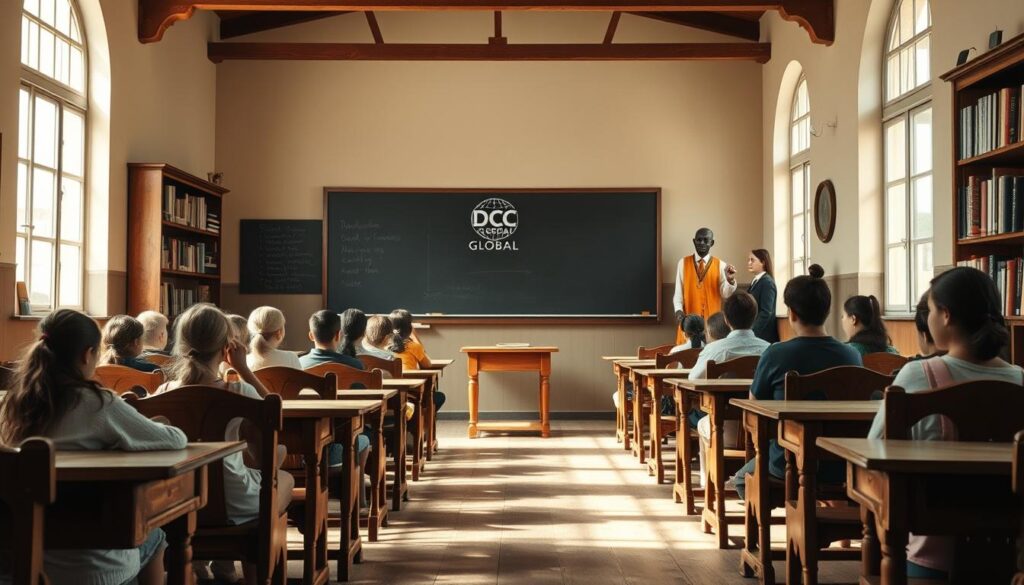
Traditional learning happens in classrooms where students meet teachers and classmates face-to-face. This direct interaction is key, allowing for live discussions, debates, and group projects. It helps students understand better and get a more personal learning experience.
Experts say traditional classrooms are great for spontaneous talks, learning social skills, and getting feedback quickly. This shows how traditional learning is more than just passing on knowledge. It's also about social growth and interaction.
Classroom Structure and Environment
The classroom setup is important for traditional learning. It's designed for teamwork and discussion, with seats that encourage talking. Classrooms have tools like whiteboards, projectors, and libraries to support different teaching styles.
- Face-to-face interaction with instructors and peers
- Access to physical resources like libraries and laboratories
- Structured schedule that helps in time management
Teacher-Student Interaction
Traditional study is great for direct talks between teachers and students. This goes beyond just lectures. Teachers can give one-on-one help, feedback, and guidance. They can also check if students understand and adjust their teaching.
The bond between teachers and students is key to traditional learning's success. It lets teachers really get to know their students. This way, they can teach in a way that fits each student's needs.
In summary, traditional study is a full learning experience. It mixes academic challenge with social interaction. Its setup and the direct teacher-student connection make it a top choice for many.
Key Differences Between Online and Traditional Learning
It's important to know the differences between online and traditional learning. These two ways of learning have their own unique qualities. They shape how we learn in different ways.
Learning Environment
The learning environment is a big difference between online and traditional learning. Online learning offers flexibility. Students can study from anywhere, at any time, as long as they have internet.
Traditional learning happens in a classroom. Students must be there at specific times.
Some benefits of online learning include:
- Flexibility in scheduling
- Accessibility from any location
- Reduced need for physical infrastructure
Interaction and Networking Opportunities
Interaction and networking differ between online and traditional learning. Online learning uses digital communication tools like forums and video calls. Traditional learning offers face-to-face interaction with teachers and peers.
For example, online learning platforms may have:
- Discussion forums for asynchronous communication
- Live sessions for real-time interaction
- Peer review and feedback mechanisms
Curriculum Delivery Methods
How curriculum is delivered also differs. Online courses use digital platforms for materials and assessments. Traditional learning uses physical materials and in-class instruction.
"The way curriculum is delivered can significantly impact the learning experience, with each method having its own advantages."
Benefits of Online Study
Online study offers many benefits, like flexibility and convenience. It also makes learning more accessible and cheaper. These points are key for students looking at their learning options.
Flexibility and Convenience
Online study is very flexible. Students can learn at their own pace. This helps them manage school with other life parts.
Key features of flexible online learning include:
- Access to course materials 24/7
- Ability to complete assignments on your own schedule
- Reduced need for commuting, saving time and money
Accessibility of Resources
Online study opens up a world of educational resources. You get access to digital libraries and online databases. You can also talk to teachers and classmates online.

This access makes learning richer. It also gets you ready for a world where info is easy to find.
Cost-Effectiveness
Online courses are cheaper than traditional classes. You save on travel and living costs. Plus, many offer payment plans, making learning more affordable for more people.
| Cost Component | Traditional Learning | Online Learning |
|---|---|---|
| Tuition Fees | Often higher | Generally lower |
| Commuting Costs | High | Minimal to none |
| Accommodation | Expensive | Not applicable |
Online study lowers costs. This makes higher education possible for more students.
Benefits of Traditional Study
Traditional study gives students a full learning experience. It includes a structured place to learn, quick feedback, and chances to meet others. This mix of learning can really help students grow in school.
Structured Learning Environment
A traditional classroom is a structured learning environment that helps students focus. Being in a room with a teacher and friends makes learning more exciting and motivating.
Immediate Feedback from Educators
One big plus of traditional study is the immediate feedback from teachers. In class, teachers can quickly explain tough topics. This helps students understand and remember what they learn.
Social Interaction
Traditional study also means lots of chances to meet and talk with others. Students work together, join groups, and do activities outside of class. These are key for learning social skills and making professional contacts.
| Benefits | Description | Impact on Learning |
|---|---|---|
| Structured Environment | Physical classroom setting | Enhances focus and discipline |
| Immediate Feedback | Instant clarification from teachers | Improves understanding and retention |
| Social Interaction | Peer interaction and group activities | Develops social skills and professional networks |
In summary, traditional study offers a complete learning experience. It has a structured place to learn, quick feedback, and chances to meet others. These benefits make it a great choice for students who do well in a traditional classroom.
Challenges of Online Study
Online study has many benefits, but it also has challenges. The flexibility and convenience can be balanced by the need to stay motivated and manage time well.
Self-Discipline Required
One big challenge is needing self-discipline. Without a classroom, students must manage their time and stay motivated. This requires personal responsibility and the ability to work alone.
- Create a dedicated study schedule to stay on track.
- Set clear goals and deadlines for completing coursework.
- Use productivity tools to minimize distractions.
Potential for Distractions
Online learning can be full of distractions. These can come from social media, email, or digital notifications. Students must find ways to stay focused.
Here are some tips to reduce distractions:
- Choose a specific study area without interruptions.
- Use website blockers or apps to stay focused.
- Set boundaries with family and friends during study times.
Limited Hands-On Experience
Another challenge is the limited hands-on experience. Some subjects, like lab sciences or vocational training, need practical experience. This can be hard to get in an online setting.
To solve this, online programs are adding virtual labs or simulations. These help students get practical experience. Some programs also require on-campus visits or internships for hands-on learning.
Challenges of Traditional Study
Traditional learning has many benefits, but it also has its challenges. It has been the main way of learning for centuries. Yet, it's important to see its limits in today's fast world.
Rigidity in Schedule
Traditional learning has a strict schedule. This can be tough for students with other commitments or who learn at their own pace. It makes learning less personal.
Commute Times
Another big challenge is the time spent traveling to school. It wastes time that could be used for learning. It also costs money for transportation.
Higher Costs
Traditional learning is often more expensive than online learning. Costs include tuition, textbooks, and living expenses for those who move for school.
| Aspect | Traditional Learning | Online Learning |
|---|---|---|
| Schedule Flexibility | Limited | High |
| Commute Time | Significant | None |
| Cost | Higher | Lower |
Suitability for Different Learning Styles
Learning styles vary a lot among people. This affects how well they do in online versus traditional education. The debate is about which method works best for different learners.
It's important to know about self-motivated and social learners. Self-motivated learners do well alone. Social learners need to interact with others.
Online Learning for Self-Motivated Learners
Online learning is great for self-motivated learners. It offers:
- Flexibility in scheduling, letting learners study at their own pace.
- Access to many resources and materials online.
- The chance to review course materials whenever needed.
Experts say online learning is good for those who are self-motivated. It lets them control their learning.
"The flexibility of online learning allows students to balance their academic responsibilities with other aspects of their lives."
Traditional Learning for Social Learners
Social learners prefer traditional learning. They get direct interaction with teachers and peers. The benefits are:
| Aspect | Traditional Learning |
|---|---|
| Interaction | Face-to-face interaction with instructors and peers. |
| Support | Immediate support and feedback from educators. |
| Networking | Opportunities to build relationships with classmates. |
Traditional learning builds a sense of community. It's key for learners who need interaction.

In conclusion, choosing between online and traditional learning depends on your learning style. Knowing the benefits of each helps learners decide their educational path.
Future Trends in Education
The future of education is changing fast. Hybrid learning models, new technologies, and a need for online credentials are leading the way. Schools are finding new ways to teach and learn.
Blending Learning Approaches
Hybrid learning models are becoming popular. They mix online study with traditional learning. This makes learning more flexible and effective.
Students get the benefits of both worlds. They enjoy face-to-face interaction and the flexibility of online learning. This approach meets different learning needs.
| Learning Model | Key Features | Benefits |
|---|---|---|
| Hybrid Learning | Combines online and traditional learning | Flexibility, personalized learning |
| Online Learning | Flexible, accessible from anywhere | Self-paced, cost-effective |
| Traditional Learning | Face-to-face interaction, structured environment | Immediate feedback, social interaction |
Technological Advancements
New technologies are changing education. Artificial Intelligence (AI), Virtual Reality (VR), and Augmented Reality (AR) are being used in schools. They make learning more immersive and interactive.
AI helps tailor learning to each student. VR and AR make complex topics easier to understand. These tools improve learning outcomes.
Rising Demand for Online Credentials
More people want online credentials. Online education is becoming more accepted. Employers value the skills learned online.
This trend will keep growing. More schools will offer online programs. Employers will look for online learning skills. Students want flexible, quality online learning that fits their lives.
Making the Right Choice
To choose between online and traditional education, think about what you prefer to learn, your life, and your career goals. This will help you pick the best learning method for you.
Assessing Your Learning Preferences
First, figure out how you learn best. Some people do well in structured environments with teachers and friends. Others like the flexibility of online courses, where they can learn at their own speed.
Think about these points when deciding how you learn best:
- Do you learn better with pictures, sounds, or hands-on activities?
- Is it important to you to talk with teachers and classmates?
- Can you stay focused and motivated when learning on your own?
Evaluating Your Life Situation
Your life situation affects your choice of learning mode. Things like your job, family, and where you live are important.
| Life Situation | Online Learning | Traditional Learning |
|---|---|---|
| Busy Work Schedule | Flexible timing | Fixed class schedule |
| Family Commitments | Can learn from home | Requires commuting |
| Geographical Constraints | Accessible from anywhere | Limited by location |
Considering Career Goals
Think about your career when choosing between online and traditional learning. Some jobs need certain kinds of education or experience.
Ask yourself these questions about your career:
- What does my dream job require in terms of education?
- Will an online or traditional degree be more valued in my field?
- Are there specific skills or experiences I need for my career?
By looking at how you learn, your life, and your career goals, you can make a smart choice. This choice will match your personal and professional goals.
Conclusion: Finding Your Path
Choosing between online and traditional learning is a big decision. The online education comparison shows online courses are flexible and easy to access. On the other hand, traditional learning offers a structured setting and face-to-face interactions.
Ultimately, the choice between online classroom vs traditional classroom depends on what you prefer. Think about your learning style, life situation, and career goals. This will help you decide what's best for you.
Weighing Your Options
It's important to weigh the pros and cons of each option. Online learning is flexible and can save money. Traditional learning, on the other hand, offers immediate feedback and social interaction.
Final Considerations
As you choose your educational path, think about what suits you best. Whether it's online learning's flexibility or traditional learning's structure, find what aligns with your goals and preferences.